
 Asim Deb
The Life of Charles Sobhraj
Compiled by: Asim Deb
“I consider myself a businessman, not a criminal.…I never killed good people.” And Richard Neville from OZ magazine reported Sobhraj as saying, “If I have ever killed, or have ordered killings, then it is purely for reasons of business, just a job, like a general in the army.”
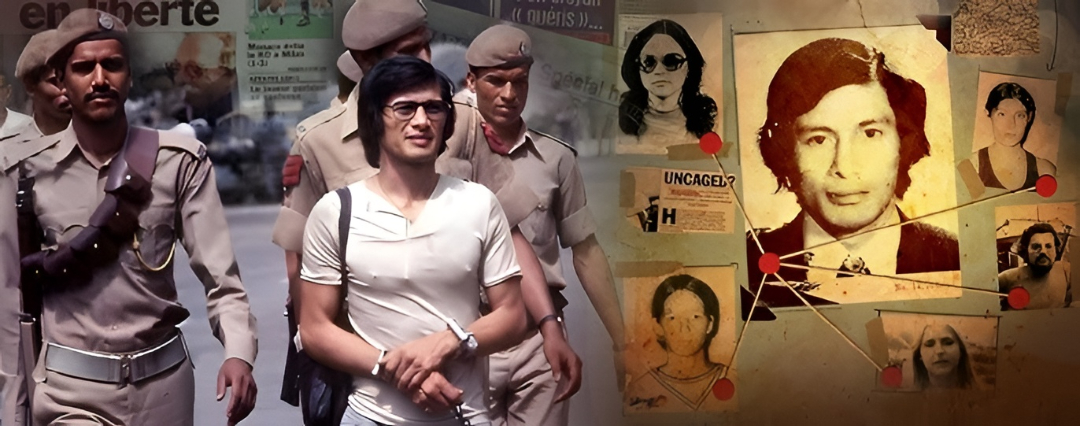
Called the “Bikini Killer” in Thailand, and “The Serpent” for for his serpentine ability to slither through borders, or prison, and also evade justice for decades, Charles Gurmukh Sobhraj, was suspected of killing more than 20 Western backpackers on the “hippie trail” through Asia. Also, it’s true that no international criminal has so far received so much of media hype.
Charles Gurmukh Sobhraj was born on 6th April 1944 in Saigon, Vietnam, which was under French rule at the time, and so he claimed French nationality. His unmarried mother Noi was a Vietnamese ship worker and his father was a Sindhi Indian Hotchand Sobhraj who deserted the family soon after Sobhraj’s birth. Sobhraj was adopted by his mother’s new boyfriend Jacques Roussel, a French lieutenant stationed in Saigon. The couple married and the family moved to Marseille, France. Roussel adopted Sobhraj’s sibling but not Sobhraj himself, leaving the boy without any formal citizenship and adrift among Vietnam, France, and Senegal as Roussel’s postings shifted. So, Charles had an unsettled childhood, never feeling quite at home in either place. At a fairly young age, Sobhraj began to display personality problems and discipline became an issue. In his teens, he turned to petty crime, which soon began to escalate out of control.
In 1960, at the of age 16, Sobhraj began stealing and received his first jail sentence for a car theft in 1963. He was sentenced to three years at Poissy prison near Paris. In this harsh prison, Sobhraj learned how to earn sympathy and favour, so he started keeping books in his cell. He found a mentor in Felix d’Escogne, a wealthy prison volunteer and knew many criminal underworld. He arranged for Sobhraj’s French citizenship and initiated him into the circles of Parisian high society. Sobhraj married a young French named Chantal Compagnon in 1969, and their daughter, Usha, was born in 1970. Intent on moving to Asia with his wife, Sobhraj committed banking fraud in Paris in June 1970 by issuing falls cheques and fled to India with Compagnon. Later that year in Mumbai he smuggled with forged documents using India’s import restrictions goods such Rolex watches, Alfa Romeo cars, etc. He then targeted tourists, robbing them of cash and passports, which he would use to make false identities for their intercountry escapes.
Soon after, he was jailed in Kabul, Afghanistan for car theft, illegal border-crossing, and unpaid hotel bills but escaped by feigning illness and drugging the prison guards with Largactil (a sedative).
Back in Paris, Sobhraj drugged his mother-in-law and kidnapped his daughter, who had been sent to live with her grandparents in 1971. He eluded custody again in Yogoslavia when he walked out of house arrest after stolen passports were discovered in his car.
Sobhraj summoned his half brother Jacques Roussel to join his passport-smuggling network, but Roussel was arrested in Greece in 1973, and implicated Sobhraj, leading to the detention of both. In Korydallos Prison in Greece he organized a tunnel escape that failed. On April 26, 1975, however, he succeeded in escaping while being taken to the prison on the Greek island by lighting a fire in a prison van and slipping away amid the smoke. Immediately after the escape, Sobhraj reappeared in India by May 1975, moving eastward over the following months and arriving in Thailand by August 1975. By then, wife Compagnon divorced Sobhraj and moved to the United States with their daughter, and remarried.
In September 1975, Sobhraj drugged Frenchman André Breugnot, drowned him in a bathtub, and staged the scene as an accident. In mid-October in Pattaya, with accomplice Ajay Chowdhury (an Indian associate who later vanished), he drugged and drowned American backpacker Teresa Knowlton, whose body was found in a bikini that contributing to his “Bikini Killer” moniker.
On October 27, in Si Racha village, with Chowdhury, Sobhraj drugged, strangled, and burned the Turkish traveler Vitali Hakim under the pretext of taking him to the gem mines at Chanthaburi. In December in Pattaya Sobhraj and Chowdhury strangled Stephanie Parry (Hakim’s friend) to death and left her in a ditch.
Moving to Kathmandu, Nepal, he drugged and burned American Connie Jo Bronzich and Canadian Laurent Carrière. Sobhraj also then poisoned a Dutch couple Henk Bintanja and Cornelia (“Cocky”) Hemker and then burned their bodies. They were initially mistaken for Australian travelers Vera and Russell Lapthorne, who luckily survived an earlier poisoning.
Back in Bangkok on March 11, 1976, Thai police raided Sobhraj’s Kanit House apartment (bought in September 1975 with his girlfriend Marie-Andrée Leclerc) and found stolen passports. Though the police picked up Sobhraj, Leclerc, and Chowdhury, they were shortly released for lack of evidence.
Moving to India, on July 5, 1976, with his French associate Jean Dhuisme, Sobhraj drugged 60 French students at Delhi with laxatives and sleeping pills to steal their passports. The drugs didn’t affect all the students, three of his victims attacked him and alert the authorities. Sobhraj was sentenced to 12 years in prison and really embraced his life inside. He bribed the guards and lived a life of luxury. He was also accused of the murder of French tourist Jean-Luc Solomon, who had been poisoned in a Bombay hotel in July 1976. Sobhraj went on a hunger strike but to no avail. He was sentenced to seven years imprisonment. He was spared India’s death penalty, even although the prosecution fought for it. He was sentenced a further five years on other criminal charges, making a total of twelve years imprisonment. In May 1982 an Indian court convicted him of the 1975 murder of Alan Jacobs, an Israeli tourist, and gave him and Leclerc each a life sentence, both of which were later overturned.
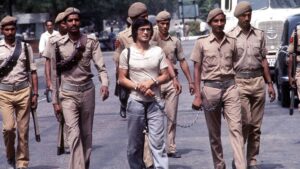
While imprisoned in Delhi’s Tihar Jail, Sobhraj could record officials’ statements of corruptions, and then blackmailed the superintendent for privileges. On March 16, 1986, under the guise of his 42nd birthday party, he staged his most famous prison escape: Sweets laced with sedatives like Chloral Hydrate and medazepam, he overpowered the jail wardens as Sobhraj fled in a car with his accomplices and four prisoners. He staged his jailbreak and also ensured that Thailand’s statute of limitations on the murder charges expired, thus averting a possible death sentence. The 20-year extradition warrant from Thailand had expired and Sobhraj was not in possession of legal travel and identity documents. But he was recaptured on April 6, 1986, at O’Coqueiro restaurant in the Indian coastal state of Goa by the Inspector Madhukar Zende. He was then released from prison in India in 1997. The escape from Tihar Jail added 10 years to Sobhraj’s existing sentence, which he was serving for various crimes including poisoning and murder.
The Indian government decided to deport Sobhraj to France, as he had always claimed French nationality, having been born in Vietnam when it was under French rule. The government also withdraw all pending cases against him, taking this decision, as they believed his further stay in India might have created law and order problems. New Delhi additional sessions Judge Y S Jonwal finally allowed the public prosecutor to withdraw the remaining 1986 jailbreak case against Sobhraj, as he had already served more than twice the maximum 10-year sentence. The French Embassy in New Delhi issued Sobhraj with a travel permit and Indian authorities received the order of his expulsion from the country. On 8 April 1997, two days after his 53rd birthday, Sobhraj was deported to France accompanied by two officials of the Foreigners Regional Registration Office. Sobhraj by then a media celebrity for all the bad reasons, he had to wait at Charles De Gaulle airport as the press wanted his interview. That gave him more money to earn. Sobhraj settled in the suburbs of Paris as if enjoying his retirement. Behaving like a celebrity, he hired an agent and began charging thousands for personal interviews and photographs. He entered a £7 million deal for an Indian film based on his life.
In 2003, Sobhraj surprisingly returned to Nepal, where he had committed crimes for which he had not yet been acquitted. This journey was to be his downfall, as a journalist saw him in the streets of Kathmandu on 17 September and Sobhraj was arrested on 19 September 2003 at the Royal Casino in Kathmandu’s five-star Yak and Yeti Hotel. He was arrested for the 1975 murders of Bronzich and Carrière.
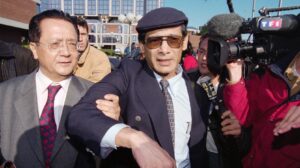
On 20 August 2004, in the Kathmandu District Court, he received a life sentence. Then a decade later was given an additional life sentence for Carrière’s killing. A substantial portion of the evidence was provided by Interpol and Dutch investigator, Knippenberg, who had been collecting documentary evidence against Sobhraj for almost 30 years. So, Sobhraj remained in prison for 19 years until Nepal’s Supreme Court ordered his release on December 23, 2022, citing age and humanitarian grounds, deporting him to France.
In late September 2004, Sobhraj’s long-suffering wife, Chantal, filed a case against the French government before the European Court of Human Rights for refusing to provide Sobhraj with any assistance. In 2005, Kathmandu’s Court of Appeals confirmed Sobhraj’s conviction. Then released on humanitarian grounds in 2022, he now lives in France.
By now, I am sure the readers has lost complete track of how many crimes he did and in how many countries. In short, these are France, Greece, Turkey, Iran, Afghanistan, Pakistan, Nepal, India, Thailand, and Malaysia, and could escape from prisons from many of them.

Whilst latterly believed to be a psychopath, Sobhraj’s motives for murder were dissimilar from most other serial killers. He seemed not to be driven by any deep-seated violent impulses or twisted sexual fantasies, but rather by the need to find a ready source of finance for his outlandish lifestyle. It is unclear as to why Sobhraj would choose to return to Nepal when he had settled quite comfortably in France but there are some who claim it was ultimate arrogance combined with his constant need for attention that drove him to it. In some people’s eyes, this only served to make him all the more chilling. That’s why he said, Sobhraj as saying, “If I have ever killed, or have ordered killings, then it is purely for reasons of business, just a job, like a general in the army.”
Vietnam attempted to conscript him, India proved unfavorable to him, and France granted him citizenship only years later. Not belonging anywhere would become the foundation of his later craft: passing as anyone, anywhere. May be, so as a child, he frequently rebelled by running away, stealing toys for his siblings, and shoplifting.
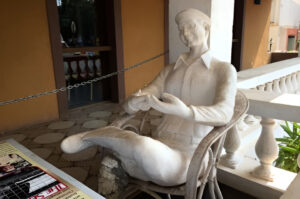
It’s interesting, in Goa, India, a statue of Sobhraj, featuring his signature cap and sunglasses, stands in the O’Coqueiro Restaurant, Alto-Porvorim, Goa, where he was captured.

There is Serpent’s one unsolved mystery: does Charles Sobhraj know what happened to Ajay Chowdhury?
The serial killer’s mysterious friend helped him commit at least 8 murders. In 1976, they walked together into the Malaysian jungle and then disappeared. Is he still alive?
His life remains one of the most notorious examples of cross-border crime of the 20th century. So many books are written on his memoir Moi, le Serpent (2023; by Jean-Charles Deniau), in the books Serpentine (1979) by Thomas Thompson and On the Trail of the Serpent (1979) by Richard Neville and Julie Clarke, in the documentary Sobhraj, or How to Be Friends with a Serial Killer (2004), in the Indian film Main Aur Charles (2015; “Me and Charles”), and in the dramatized BBC-Netflix miniseries The Serpent (2021).
Serial Killer, or Bikini Killar, or The Serpent, whatever we say, his crime track records embarked on a life as an international lawbreaker, which would take him to Greece, Turkey, Iran, India, Thailand, Pakistan and Afghanistan. His skill in passport thefts would be enough food for the Hollywood and Bollywood movies.
References:
https://www.britannica.com/biography/Charles-Sobhraj
https://www.bbc.com/news/world-asia-64073271
https://www.afp.com/en/release-prison-charles-serpent-sobhraj
https://www.crimeandinvestigation.co.uk/crime-files/charles-sobhraj-the-serpent
Wikipedia
**********






আপনার বিষয়ের ব্যাপ্তি ও বৈচিত্র্য আমাকে মুগ্ধ করেছে। অপরাধী তো অনেক আছে, কিন্তু এই চার্লস শোভরাজের মতন চরিত্রকে সাহিত্যে পরিণত করা সহজ নয়। এটা লিখতে গিয়ে আপনি যে অনেক বই বা ইন্টারনেট ব্যবহার করেছেন সে বোঝাই যায়। সত্যি একটি ইন্টারেস্টিং প্রবন্ধ উপস্থাপনা করেছেন। সহজ ইংরেজিতে worth reading.
ধন্যবাদ
Another interesting article from you.
We all have heard his name, and had a little idea of the man, that he was an intelligent criminal. That’s all.
Today after reading this write up, My God, I understand what a cool headed criminal he was, and intelligent too. Hope this article covered his entire crime life.
Well written, and with lots of information.
Thanks dear author.
One more nice article Asim.
We had some or better to say a little Idea of this man during our early days,
I could go through your work in details, and an eye opener indeed.
Nice one, please continue writing.
Thanks
Biography of a criminal beautifully sketched in short texts. He is and would remain an exception.
In my opinion, the frustration of a child without any parent, caused this boy to go to crimes, from small small theft and ultimately to murder. With any guardian around, his life could have been different.
Thanks dear author for presenting us an article of such a rare personality.
Another interesting article from Ashim, well compiled from different sources.
I heard the name of Charles Shovraj from newspaper when he was arrested. I had the impression that he was spending rest of his life in Jail or is not alive. This article gives me a detail picture of his activities. Strangely, he is still alive and living in France even after so many homicides. He is in need of money. Hopefully, he will not involve himself in any more criminal activity. However, I feel sorry for his disturbed childhood that is responsible for such future criminal behaviour.
Probably, there are more unknown facts about him that will not reach us.
Thanks Ashim for your contribution.
I have gone through one of the previous comments, and agree that his unprotected childhood was the main reason.
He was growing as a child without any parent, neither he had any formal citizenship. So, the inevitable that happened.
Very unfortunate life, always in negative side of our society.
Thanks author for sharing the insight,
Excellent…
এত কাণ্ড করেছে জানতাম না।
এবার রাম রহিম এর উপর একটা লেখা দে
দাদা/ ভাই
এটা দারুণ এক থ্রিলার biography.
আমি শুধু জানতাম তিহার জেল থেকে পালিয়েছে, আর নেপালে গিয়ে আবার ধরা পড়েছে। কিন্তু এতগুলো দেশের পুলিশকে ধোঁকা দিয়ে বর্ডার পেরিয়ে চলে গেলো, বা যেভাবে তিহার থেকে পালিয়ে গেলো, এগুলো জেমস বন্ড সিনেমার নকল থেকে অনেক অনেক উচ্চ মানের।
জন্ম থেকেই অবহেলিত, নইলে তাঁর চলার পথ হয়তো অন্যরকম হতো।
সবশেষে, লেখককে সাধুবাদ একটা থ্রিলার বায়োগ্রাফি উপহার দেওয়ার জন্য।
A serpent indeed! One who can be charming to male and female alike but does not hesitate to poison or strangle the victim of his charm. Yes, a real villain or Satan can be handsome and alluring with his impeccable manners, yet keep the deadly venom hidden under his hood.
His prey could never recognize the true self of the Mephisto. And he describes his wanton killings as business! –without any malice!
Asim’s rigorous research and deft writing skill creates the picture of the psychopath. However, those paid interviews and glamourizing the Evil by making a hero in a so-called biopic makes me sad.
But that is the world we live in.
অসীম দেবের কলমে যথারীতি প্রচুর অজানা ও তথ্যসমৃদ্ধ আরেকটি প্রতিবেদন পেলাম।
চার্লস শোভরাজ নামটি অজানা নয়, তবে তার এই জীবনী নতুন করে জানলাম।
আরও অনেক এরকম পাওয়ার আশায় থাকবো।
Once again I am impressed with your this article.
The name Charles Sobhraj is familiar with the Indian community, but today after reading the text I realise that we knew only a little about him.
I would say he was an intelligent person, he should have been on the other side of his sphere of works, I mean he should have been a law protector, not a law breaker.
Thanks author for sharing the article.
In the record book, he is a serial killer. I understand the number is 20. He deserves punishment. But in Tihar Jail, he could change punishment to luxury, he could build his own empire. And his serpentine escape beats any Hollywood thriller. How come a criminal escape the boundary walls of a jail? Or cross international borders at ease with fake documents?
On one side he is a hated criminal, on the other side as if a magician.
Author has beautifully sketched his biography.
In my college days, in around seventy’s decade of last century, I, for the first time heard Shovraj’s name. In those days news paper was only source of information in our small town. Some of his heinous deeds were reported there.
He was a notorious criminal. But at the same time, he had brain also.
Who knows, had he got a good parentage in his childhood, he could emerged as a brilliant person and delivered to society at large.
I only imagine, in his fag end of life, he can feel his wrong deed and repents.
চার্লস শোভরাজের কথা অনেক বছর ধরে শুনে আসছি। তবে ভাসা ভাসা। অসীমের লেখাটা পড়ে ওর সম্বন্ধে বিশদ জানা গেল। ও এখনও বেঁচে আছে । থাকে ফ্রান্সে। বয়স আশির উপরে। যারা বিশেষ গুনের অধিকারী তাদের মানুষ মনে রাখে ও glorify করবার চেষ্টা করে। এই বিশেষ গুন নেতিবাচকও হতে পারে। সম্ভবত শোভরাজের বিশেষ গুনের মধ্যে আছে তাৎক্ষনিক বুদ্ধি , সাহস ও বিবেকের তাড়ানো বিহীন। ওর জেল থেকে পালানো বা এক দেশের সীমান্ত থেকে অন্য দেশের সীমান্তে ঢুকে যাওয়া বিস্ময়ের সৃষ্টি করে। যাকে বলে serpentine exit। এই রকম আর একজনের কথা পড়েছিলাম। Drug lord E I Chapo । মেক্সিকোর অধিবাসী। গরীব চাষি পরিবারে জন্ম। ড্রাগ ব্যবসা করে প্রভূত সম্পদের অধিকারী হন। মাদক ব্যবসা বাড়াবার জন্য দুই দেশের সীমান্তের মধ্যে সুড়ঙ্গ কাটা হয়েছিল। সুরঙ্গ কেটে জেল থেকে পালিয়ে গিয়েছিলো। অবশেষে ধরা পড়ে এখন আমেরিকায় যাবজ্জীবন জেলে বন্দী। এখনও পর্যন্ত তার প্রায় ১৩ বিলিয়ন ডলার সম্পত্তি বাজেয়াপ্ত করা হয়েছে। এখন বয়স প্রায় ৭০ । ওর জীবন নিয়ে টেলিভিসন সিরিয়াল ও Netflix এ web series হয়েছে।
ছাত্র জীবনে Charles Sobhraj সম্পর্কে অনেক কিছু জেনেছিলাম। Media তে খুব প্রচার পেয়েছিল। আজ আবার লেখকের লেখা থেকে অনেক কিছু জানতে পারলাম। লেখা ভালোই লাগল তবে বিষয় টা বিতর্কিত, এই যা।
চার্লস শোভরাজের নাম আমার কাছে অজানা নয়। কিন্তু অসীমের এই প্রতিবেদন পড়ে আমি অবাক। নিঃসন্দেহে বলতে পারি তাঁর তীক্ষ্ণ মেধা ছিল, উদ্যোগ ছিল, কিন্তু কোনোটাই positive direction এ যায় নি। কিভাবে তিহার জেল থেকে পালিয়ে গেলো, এ একমাত্র সিনেমাতেই সম্ভব।
আর আমিও মনে করি, শৈশব থেকে গাইডেন্স পেলে তাঁর মেধা অন্য অনেক কিছুই দিতে পারতো।
আর অসীমের প্রতিটি লেখাই ইন্টারেস্টিং আর অত্যন্ত নিষ্ঠার সঙ্গে তথ্যপূর্ণ।
আরও অনেক নতুন নতুন লেখা আশা করবো।
So well compiled and articulated biography a dense, 20 country crime spree into a readable narrative is truly commendable. I like the chronology of his life which is so nicely penned. Charles Sobhraj was a sensation in our growing up days and a subject of discussion amongst friends in school play grounds and other common assembly places. His criminal saga is more chilling than sensational as this 10 minute read reveals. The Ajay Chaudhary mystery still remains something which triggers more research on his life which can beat a celluloid thriller right from his childhood. So many Hindi films during those days portrayed the criminal protagonist inspired from Sobhraj. One such film I remember was Karma, where Anupam kher was portrayed in the film by Subhash ghai very much in the line of Sobhraj. A supercomputer brain a misguided genius whose childhood was hijacked and drove him into the dark world of crime and all through his journey each and every act of crime was committed with clinical precision. Thanks Asim da for sharing and best wishes once again for a roller coaster blog journey for many such interesting articles.
In my earlier days, newspaper and to a certain extent TV was the only two social media. News magazine was not so common in every household.
So, with my little scope to know, Charles Sobhraj was our Phantom like character, we used to argue amongst our friends. His sensational life was never less thriller than any Hollywood Bond film hero. Many Hindi as well as regional films later adopted many of his actions portraying heroic characters. A genius brain of his time, unfortunately drove him to underworld crime and all through his life.
Thanks author for sharing such a beautiful article.
রিভিউ দিতে গিয়ে আগের কিছু মতামত পড়লাম। আগের সকলের প্রতিটি রিভিউ এর সাথে আমি একমত। তাই নতুন কিছু লিখছি না।
তবে লেখকের উদ্যম, এবং নিষ্ঠার সাথে অসীম ধৈর্য নিয়ে এত সুন্দর ছোট একটা বায়োগ্রাফির তারিফ না করলে অন্যায় হবে।
ভবিষ্যতে আরও বিভিন্ন ধরনের লেখা আশা করছি।
During the later part of our college days in 1975-76-77, we read about this criminal Mr.Charles Sobhraj in Indian print media.His Indianised name caused some interest among Indian’s to some extent who this fellow was.?Again he resurfaced in 1982-83 and jailed.There after his offences were reported in various cities of India,France,Thailand and Nepal.Due to lackadaisical attitude of prison authorities of India and slacking criminal laws of Thailand,Sobhraj got free many times instead of getting taste of prison. It is surprising that he was appreciated with a statue in Goa ! In criminal psychology ,difficult childhood is often attributed as the cause of criminal bent of mind.His may be that case.It is also astonishing that he earned a lot of money by giving press interviews. To some extent Nepal showed him his right place but human rights group came of his help.Alas!
অতি সংক্ষিপ্ত ভাষায় এমন এক আন্তর্জাতিক অপরাধীর কাজকর্ম চমৎকারভাবে তোলা হয়েছে। তিনি ছিলেন এবং অপরাধ জগতের ইতিহাসে থাকবেন এক ব্যতিক্রমী চরিত্র।
অভিভাবকহীন হতাশা থেকেই এই ছেলেটি অপরাধচক্রে জড়িয়ে পড়ে। ছোটখাটো চুরি থেকে শুরু করে অবশেষে খুনের মতো অপরাধে। কোনো অভিভাবক থাকলে হয়তো তার জীবনটা অন্যরকম হতে পারত।
এমন এক বিতর্কিত ব্যক্তিত্বকে নিয়ে লেখা নিবন্ধটি উপহার দেওয়ার জন্য প্রিয় লেখককে ধন্যবাদ।
I am impressed with your diversity on interesting subjects, and also for the art of its submissions.
Making stories or films on the life of criminals is too common. But transforming a figure like Charles Sobhraj into a literary subject is no easy task. Anyone would understand that you have consulted numerous sources and while texting this. You have truly presented an interesting essay—one that is well worth reading.
Thank you.