
 Asim Deb
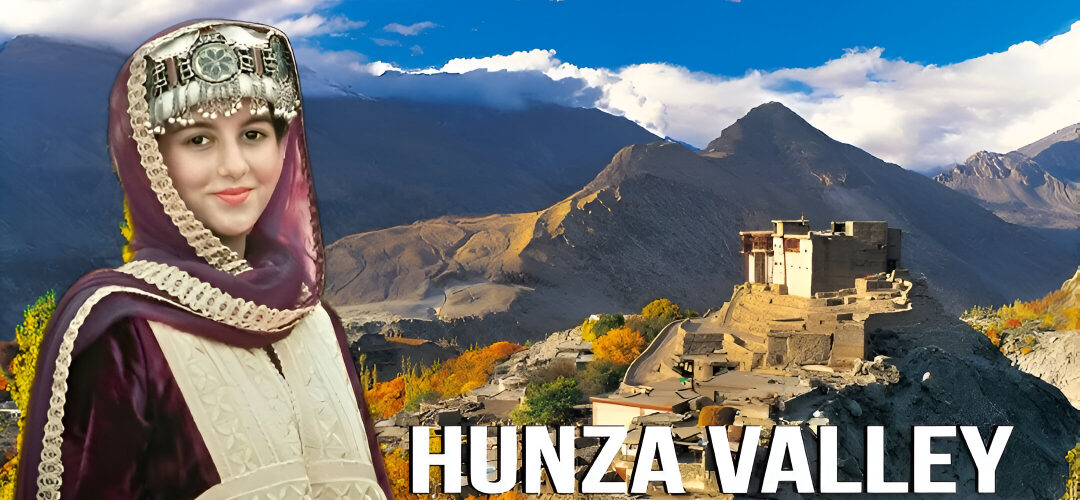
Hunza Valley: Life in A Natural Paradise
© Asim Deb
Hunza (locally known as Burushaski) is a mountainous valley in the Gilgit-Baltistan region of Pakistan, in the northern part of the country, bordering Afghanistan’s Wakhan Corridor and China’s Xinjiang region. Geographically, Hunza comprises three areas: Upper Hunza (Gojal), Central Hunza (Hunza Valley), and Lower Hunza (Shinaki).
From 1892 until August 1947, Hunza was a princely state within the subsidiary alliance system of British India; following India’s independence, it maintained a neutral political stance for three months before acceding to Pakistan in November 1947. Currently, Hunza is located in the northern part of Gilgit-Baltistan, Pakistan. Its geographical boundaries are the Gilgit Agency to the south, the State of Nagar to the east, Xinjiang (China) to the northeast, and Afghanistan to the northwest. The capital was Baltit (also known as Karimabad); it is now in the Aliabad Tehsil of the Hunza-Nagar District in Pakistan. According to the 2023 census, the population of the Hunza Valley was approximately 65,497, primarily consisting of Nizari Ismailis belonging to the Shia branch of Islam. The spoken language is Burushaski.
Hunza Valley: A Natural Paradise
Nestled in the rugged northern terrains of Pakistan, the enchanting Hunza Valley has long been a beacon for adventurers, nature enthusiasts, and peace seekers from around the world. Located in Gilgit-Baltistan, Hunza is a breathtaking region that offers unparalleled views of the Himalayas and the Karakoram Range, showcasing some of the most pristine landscapes on Earth. The valley is celebrated not only for its natural beauty but also for its rich history, diverse culture, and the resilience of its people.
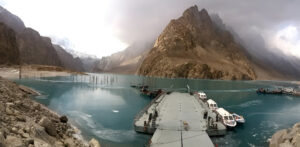
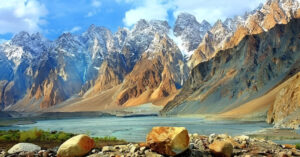
Geography and Landscape
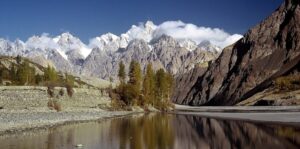
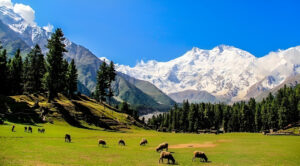
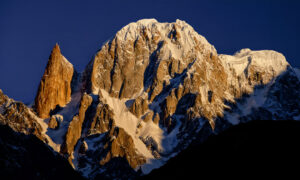
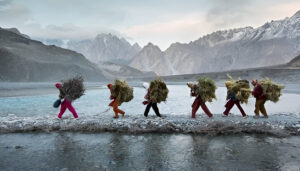
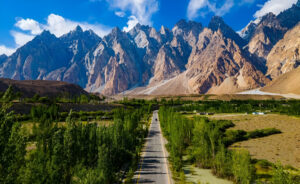
Hunza Valley lies along the Hunza River and is surrounded by snow-capped mountains, lush-terraced fields, and vibrant cherry blossom trees. At an elevation of 2,438 meters (7,999 feet), the valley offers crisp, clean mountain air and a cool climate that contrasts sharply with the lowlands of Pakistan. One of the most iconic peaks visible from Hunza is Rakaposhi, which stands at 7,788 meters (25,551 feet), as well as Ultar Sar, Passu Cones, and Ladyfinger Peak. The valley itself is divided into three main regions: Upper Hunza (Gojal), Central Hunza, and Lower Hunza.
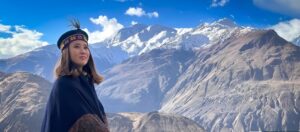
The Hunza Valley is situated along the banks of the Hunza River, surrounded by snow-capped mountain peaks, terraced green fields, and picturesque cherry blossom trees. Located at an altitude of 2,438 meters (7,999 feet) above sea level, the valley enjoys a cool, crisp mountain climate that is vastly different from the weather in the plains of Pakistan. Several towering peaks are visible from the Hunza Valley, such as Hunza Peak (20,571 feet), Rakaposhi (25,551 feet), and Ultar Sar (24,239 feet), Ladyfinger (Bublimating, 19,685 ft), Bojohagur Duanasir (24,045 ft), Distaghil Sar (25,869 ft), Diran (23,835 ft), Darmyani (19,980 ft), and others. In addition to these, there are approximately 20 more peaks in this small valley. It is extremely rare to find so many snow-capped Himalayan peaks concentrated in such a small area. Furthermore, the valley’s beauty is enhanced by numerous lakes, such as Attabad Lake, Borith Lake, Shimshal Lake, Hassanabad Lake, Naltar Lake, Rush Lake, Snow Lake, Kacheli Lake, and others.
It is claimed that the good health of the Hunza people stems from their wholesome diet, the pollution-free environment of the Himalayan highlands, drinking water rich in natural minerals like potassium, calcium, and iron, and the habit of bathing in ice-cold water year-round. The Hunzas consume a very limited diet yet engage in strenuous physical labor. Even when the valley is blanketed in snow during winter, they do not bathe in warm water. Researchers suggest that due to their unhurried and stress-free lifestyle, the Hunzas do not suffer from ailments associated with mental stress. The Hunza people live long, healthy lives primarily due to their proper dietary habits and lifestyle. This longevity is mentioned in James Hilton’s novel *Lost Horizon*, which later inspired a film adaptation by Frank Capra.
The Hunzas’ staple diet consists of barley, millet, and wheat flour—foods that help build physical strength. Their diet also includes abundant quantities of dried apricots, citrus fruits, nuts, beans, and corn. Apricots contain abundant amounts of amygdalin (Vitamin B-17), which is capable of preventing cancer and other diseases. Following ancient traditions, the Hunza people consume nothing but a drink made from powdered dried apricots for four months of the year. Due to living in a remote area, the Hunzas have to walk about 15 to 20 kilometers every day for various activities. Many researchers believe that apricots play a significant role in the longevity and vitality of the Hunza people. Their diet is low in butter, cheese, eggs, and milk, and the intake of meat is also very limited. Instead, their regular diet consists of various types of green vegetables, fruits, and flowers. They brew the leaves of a plant called *Tumuru*, which is rich in antioxidants and drink it like tea.
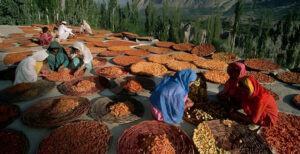
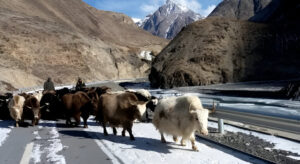
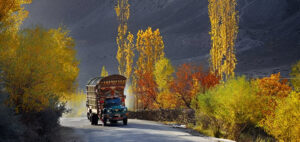
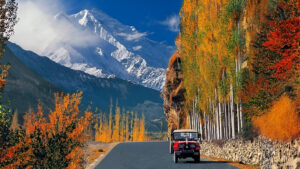
One of the best ways to experience the valley is to take the Karakoram Highway, which is considered one of the most scenic drives in the world. The road winds through the mountains, offering stunning views of the valley below. Along the way, travelers can stop at small villages to experience local culture and sample traditional food.
In the true sense, the Hunza Valley is a region largely unknown to the outside world. Perhaps the most astonishing fact is that the average life expectancy of its inhabitants is believed to be around 120 years. This remarkable longevity first came to light when an elderly woman arrived at an airport in England; her passport indicated an age that would have made her 150 years old at the time. Similarly, in 1984, an elderly man from Hunza named Syed Abdul Mabud arrived at London’s Heathrow Airport from Pakistan. His passport listed his year of birth as 1832, meaning he was 152 years old at the time. Thanks to immigration officers and the media, this story created a global sensation, and researchers began flocking to the Hunza Valley. This region of Pakistan remains far removed from the troubles of the outside world. According to local lore, women in this community can conceive and bear a child without complications well into their sixties, seventies, or even nineties.
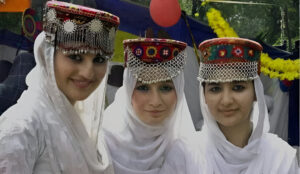
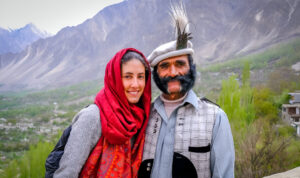
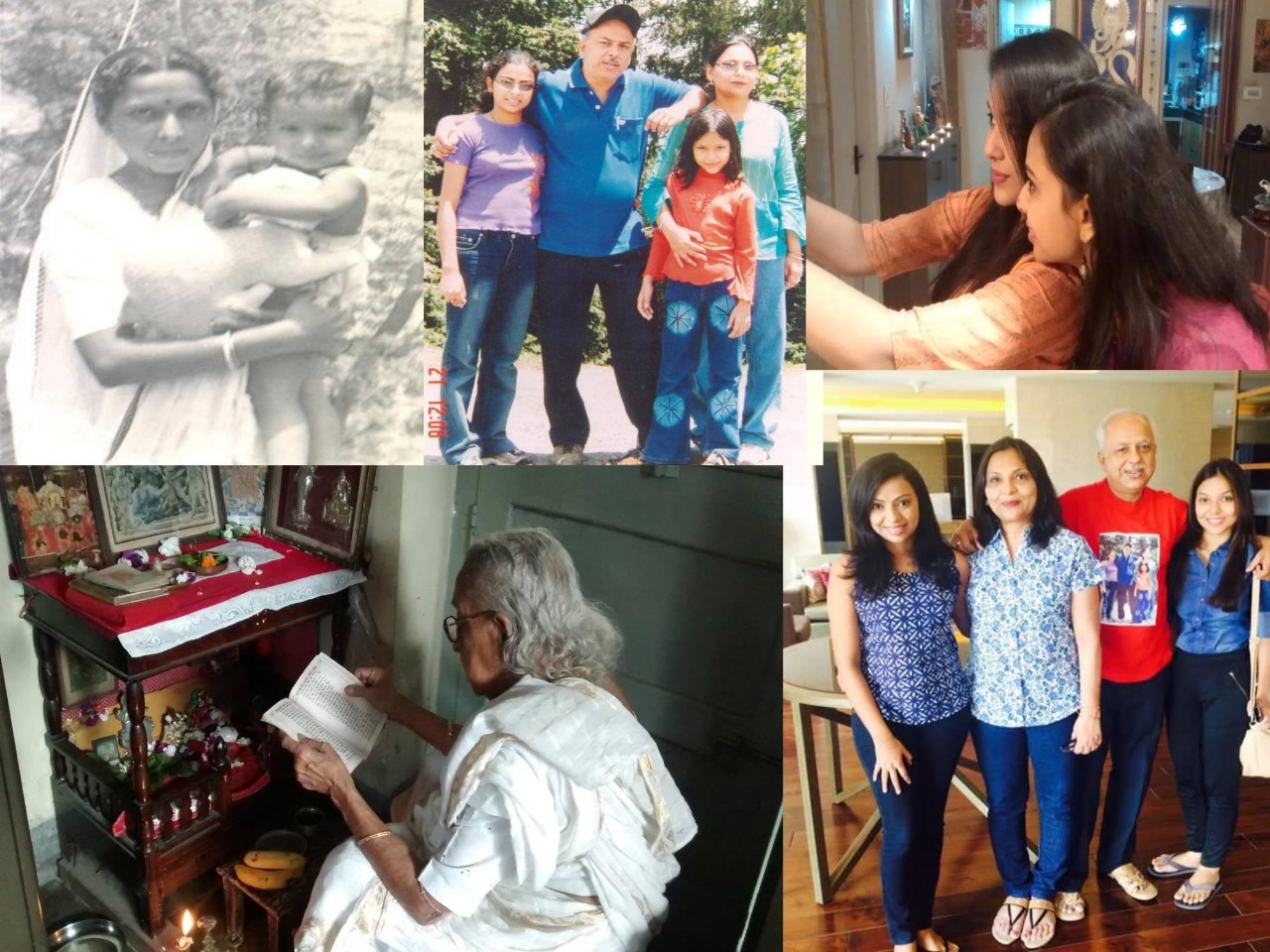
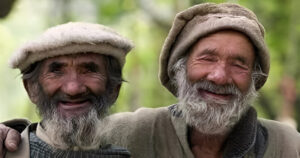 বামদিকে ৯৬ বছরের বাবা, ডানদিকে ৭৮ বছরের ছেলে।

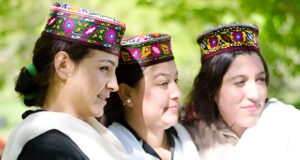
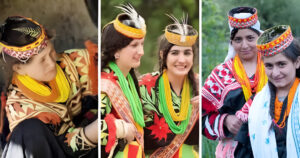
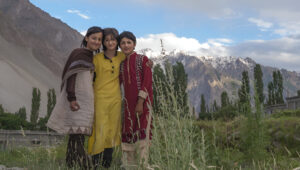
One more point; compared to the other communities in Pakistan, the people of the Hunza community are known for being far more refined in terms of education and culture.
The Brief History
According to historian Ahmad Hasan Dani, the Scythians of eastern Persia used the Karakoram route when invading Taxila in India. Carvings of horsemen and ibexes (a type of wild goat), along with inscriptions in the Kharoshti script, found on the ‘Sacred Rock’ of Hunza, mention Scythian and Pahlava rulers. Inscriptions from the Kushan era are also found on this rock, providing evidence of Scythian and Kushan dominance in the Hunza and Gilgit regions.
Around 997 AD, Hunza attempted to break away from the Gilgit Valley and form an independent state; however, it was not until the 15th century—with the establishment of the Ayash dynasty—that it fully separated, and the valley was divided into two rival neighboring states: Hunza (inhabiting the upper reaches of the basin) and Nagar. Conflict subsequently arose between these two states. Following the invasion of Kashmir by Mirza Haider Dughlat—a member of the Mughal dynasty—the ‘Mir’ (ruler) of Hunza established diplomatic relations with the Yarkand Khanate of Kashgaria. Even after Kashgaria came under Chinese control, he maintained this relationship by paying an annual tribute of 16 tolas of gold dust to the Chinese government in Yarkand. In exchange for this symbolic tribute, Hunza secured territorial rights in the Raskam Valley and grazing rights for livestock in the Taghdumbash Pamir region. For centuries, Hunza was an independent kingdom ruled by the Mir dynasty, whose rulers bore the title ‘Thum’. In 1761, China recognized it as a suzerain state. At one time, the rulers of Hunza claimed descent from the Greek emperor Alexander.
Following the establishment of British hegemony in South Asia, the princely state of Jammu and Kashmir was formed under the Treaty of Amritsar in 1846. In 1847, the Mir—the ruler of Hunza—acknowledged nominal allegiance to China. The last fully independent ruler, Mir Safdar Ali Khan (1886–1891), fled to China following a British invasion.
Towards the end of the 19th century, the British suspected Russia of establishing contact with the rulers of small states along Kashmir’s northern frontier. In 1888, the Russian Captain Bronislav Grombchevsky visited Hunza, and shortly thereafter, the British Captain Francis Younghusband visited the region. He remarked to the ruler, Safdar Ali Khan, that he was unfit to govern such a refined people as the Hunzas. The ‘Jangir-e-Lai’ war between the State of Nagar and the British Raj forces took place in the Nilt area from December 1 to December 23, 1891. In the Nilt Nala area (known as Jamila Mo Har), the people of Nagar put up fierce resistance against British forces under the leadership of their *Tham* (ruler), Azur Khan. Despite fighting for over 20 days, the Nagaris were ultimately defeated due to a lack of adequate weaponry; more than 100 Nagaris lost their lives in the conflict, and 127 were taken prisoner. On the other hand, four British officers and over 50 Dogra soldiers were killed on the British side. In 1891, Hunza acknowledged British suzerainty. The ruler—or ‘Mir’—of Hunza, Mir Safdar Ali Khan, fled to Kashgar in China. The British army installed his brother, Mir Muhammad Nazim Khan (1892–1938), as a puppet ruler of the Hunza Valley, while British officials stationed in the capital, Gilgit, effectively issued all orders. The British granted Nagar the status of a princely state within the subsidiary alliance system of India. Amidst the diplomatic uncertainty between India and Pakistan in 1947 following the Kashmir dispute, the Mir of Hunza agreed to accede to Pakistan after staging an uprising against India. Even after the rebellion against the Maharaja of Kashmir and the unconditional accession to Pakistan in 1948, the state retained its status as a princely state.
In the 1960s, the people protested against the Mir’s autocratic rule, demanding the abolition of the system of compulsory unpaid labor (‘begar’) and a reduction in taxes. In 1970, they organized a march towards Gilgit to press their demands upon the authorities; meanwhile, the ‘Scouts’ force was dispatched from Gilgit to confront them. When the Scouts opened fire on the protesters in the Chalt area, nine people were killed and many others injured. The leaders of the movement were imprisoned. Subsequently, on September 25, 1974, Pakistan’s Prime Minister Zulfikar Ali Bhutto abolished the states of Nagar and Hunza and released the prisoners, and established a system of democratic representation in the ‘Northern Areas Council’ (currently known as the Gilgit-Baltistan Assembly).
It is worth noting that during the reign of Maharaja Ranbir Singh of neighboring Jammu and Kashmir (mid-19th century), the Maharaja maintained a residence in Hunza. The Mir of Hunza was a loyal subject of the Maharaja of Jammu and Kashmir and regularly sent an annual tribute to the Jammu and Kashmir court until 1947. According to Emma Nicholson, “all evidence points to the fact that in 1877, the Gilgit and Baltistan regions were part of Jammu and Kashmir.” They were under the sovereignty of the Maharaja of Jammu and Kashmir and remained under that princely rule until the date of their “full” accession to the new authority of India on October 26, 1947. Later, on November 3, 1947, the then-ruler Mohammad Jamal Khan announced their accession to Pakistan.
The Hunza Valley is also mentioned in the ancient Mahabharata. During the Mahajanapada period of ancient India, the region was under the rule of the ancient Indian kingdoms, mainly Kapisa, Gandhara, and possibly Magadha. Buddhism also spread to the Hunza Valley in the late 7th century. There are several Buddhist archaeological examples, such as the Sacred Rock of Hunza. While the Hunza Valley was central to the trade routes in the Central Asian subcontinent, at that time, Hunza provided refuge to wandering Buddhist monks and played a pivotal role in the propagation of Buddhism across this region of Asia.
The ‘Sacred Rocks’, or ‘Haldeikish’ are situated between the Hunza River and the Karakoram Highway, near the town of Karimabad in the Hunza Valley and in the vicinity of the UNESCO-listed village of Ganish. The rock is 180 meters in length and 9 meters at their highest point. These sacred Rocks of Hunza are one of the earliest sites of Petroglyphs along the ancient silk route.
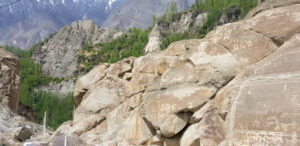
Haldeikish with its thousands of petroglyphs in Bactrian, Sogdian, Kharosht, Tibetan, Chinese and Brahmi were written by the Silk Route travellers. These petroglyphs show the diverse cultural exchange that once passed through the Hunza region and help us to understand the history of this entire region from the first millennium CE. The boulders are sign posted from I to IV each with a brief description of its petroglyph engravings. The rocks were once able to be approached by well-worn stone steps and contained a series of Buddhist cave shelters but with this mountainous area’s extreme weather and the ravages of time they have fallen with only a few being preserved.
******





Fascinating story of Hunz tribesmen is known to few people in outside world.
আমি হুনজা ভ্যালি শুনেছি। এনাদের কথা খুব একটা শোনা যায় না।
খুব ভালো লাগলো এই লেখাটা। অনেক কিছুই জানা গেলো।
আর ছবিগুলিও সুন্দর হয়েছে।
বেশ ভালো হয়েছে লেখাটা। প্রচুর তথ্য সহকারে ধৈর্য ধরে এই লেখাটা অনেক পুরোনো ইতিহাস জানার সুযোগ করে দিয়েছে। এতো সুন্দর একটা জায়গা যদি আমাদের মানে ভারতের জম্মু কাশ্মীরের অন্তর্গত হতো তাহলে খুবই ভালো হতো। একবার অন্তত ওখানে যাবার চেষ্টা করতাম ওখানকার প্রাকৃতিক সৌন্দর্য উপভোগ করতে কিন্তু দুর্ভাগ্য সেটা হয় নি।
I had a chance to go there during my college days (Chandigarh) for a project on tribal people.
It was a fascinating experience, so much different from the mainstream Indian life, and cultural, having their own world of ideas and lifestyles.
Good article, nice to read.
I had the opportunity to visit the place on a specific mission. No doubt it’s a natural heaven on the earth. Author tried here with his best to describe, but that’s impossible. I thank the author that he tried to make it open the public.
Good effort, I appreciate.
আমাদের দেশের লাগোয়া এত সুন্দর এক প্রাকৃতিক সৌন্দর্যের অঞ্চল আছে এই ধারণাই ছিল না।
এরা মনে হয় ট্যুরিজম প্রমোট করে না, বা চায় না যে বাইরের লোক দু দিনের জন্য ঘুরতে এসে এখানের শান্তি সংস্কৃতি ঐতিহ্যে প্রভাব ফেলুক। তাই বাইরের জগতে এটি অচেনা অজানা।
লেখাটা পড়ে একবার দেখে আসার ইচ্ছে হলো, দেখা যাক।
Well! Well!
An isolated paradise in Pakistan, where men and women are having incredibly long lives , some of them reaching milestones like 150 years.
And, despite isolation, the average people of the blessed Hunja valley are superior to those of Pakistan, in terms of education and culture.
Yes, this area, surrounded by mountains from three sides, and belonging to half a lakh happy people, is no less than a paradise.
Wonderfully described.
The God’s own place, he arranged all the natural beauties for this tiny region.
A must visit place for the tourists, though getting into there is a difficult task.
লেখাটি পড়ে অনেক কিছু জানতে পারলাম। যেতে তো ইচ্ছে হয় কিন্তু…..
বাংলায়ও লিখেছো, ভালো লাগলো।বিশ্বের বিভিন্ন অজানা জায়গা নিয়ে তুমি পড়াশুনা করে লিখছো, এই প্রচেষ্টা চালিয়ে যাও।
আসলে কি জানতো ইংরেজিতে প্রচুর লেখা আছে, সেগুলির রেফারেন্স সবাই দেয়।বাংলাতেও অনেক সাহিত্যিকের ভ্রমণ কাহিনী আছে যেখানে প্রাকৃতিক সৌন্দর্যের বর্ণনার সাথে সেখানকার ভৌগোলিক, ঐতিহাসিক ও সামাজিক কথাও থাকে। এখন ব্যক্তিগতভাবে আমার ইংরেজি থেকে বাংলায় পড়তে বেশি ভালো লাগে।
হাঞ্জা ভ্যালি আমি শুনেছি, কিন্তু এই নিয়ে আলোচনা বা প্রচার খুব একটা দেখি না। আমার নিজের ধারণায় ওখানের সরকার চায় না বাইরের পর্যটকরা এসে সামাজিক স্থিতি নষ্ট করুক।
লেখাটিতে অনেক কিছুই জানা গেলো, তার সাথে ছবিগুলিও লেখার গুণগত মান বাড়িয়েছে।
সুন্দর ছিমছাম একটি ভালো আর্টিকল।
হুঁজা ভ্যালি খুব একটা শোনা যায় না। লেখার সাথে ছবিগুলি থাকায় হঞ্জা ভ্যালি সম্বন্ধে কিছুটা ধারণা করা যায়। এই লেখাটা পড়ে বেশ কিছু জানতে পারলাম।
হুনজা উপত্যকার কথা এত বিশদ ভাবে আগে পাই নি ….. লেখার মধ্যে গবেষণামূলক তথ্য জানতে পেরে খুবই। খুশি হলাম ….. আরো এধরনের লেখা পাবো আশা রাখি ……
ভালো লিখেছেন। একটু তথ্য যোগ করে দিই, ব্রোনিস্লাভ গ্রোম্বচেভস্কি ছিলেন রাশিয়ান জেনারেল। স্যার ফ্রান্সিস ইয়ংহ্যাসবন্ড ছিলেন তিব্বতজয়ী ব্রিটিশ জেনারেল। ঐ তিব্বতেই উনি শ্রী শ্রী বাবাজী মহারাজের (শ্রী শ্যামা চরণ লাহিড়ী মহাশয়ের গুরুদেব) সংস্পর্শে আসেন ও দীক্ষা নিয়ে সম্পূর্ণভাবে আধ্যাত্মিক জগতে চলে যান। কলিকাতায় অনুষ্ঠিত ১৯৩৭ সালে দ্বিতীয় “বিশ্বধর্ম মহাসভার” প্রধান অতিথি ছিলেন। ঐ সভার আহ্বায়ক ছিলেন তৎকালীন কলিকাতা হাইকোর্টের বিচারপতি স্যার মন্মথ নাথ মুখোপাধ্যায়।
A good article worth reading.
There is a heaven on the earth which is strictly for the “people of the soil” and forbidden for the rest of the world.
After reading the article, and going through the pictures, I have to say that it’s a natural paradise well maintained by the local community.
If there is a chance, I would like to visit.
খুব সুন্দর লেখা। হুন্জা উপত্যকা সম্বন্ধে জানলাম। ওখানে হয়ত কোন দিন যাওয়া হবো না । তোমার লেখায় তার প্রাকৃতিক সৌন্দর্য ও মানুষজনের কথা জেনে ভাল লাগলো। রাজনৈতিক কারনেও অনেক জায়গা যাওয়া যায় না। কল্পনা ও ভাল লেখার মাধ্যমে দেশগুলি ঘুরে আসতে হয়।
হুনজা ভ্যালী এবং তার প্রাকৃতিক সৌন্দর্য সম্মন্ধে আগে একটু পড়েছিলাম। তোমার এই লেখাটি পড়ে এই ব্যাপারে আরও ভালো করে কিছু জানতে পারলাম। ইচ্ছা হয় যদি ওখানে ঘুরে আসতে পারতাম, সেটা বোধহয় আর হলো না। তোমার এই ধরনের লেখার মাধ্যমেই এই ধরনের সব জায়গা ঘুরে নেব। তুমি তোমার সুন্দর প্রচেষ্টা চালিয়ে যাও।
আমাদের ভারতের উত্তর প্রান্তে আর পাকিস্তানের নীচে অনেক সুন্দর প্রাকৃতিক অঞ্চল আছে। ট্যুরিজমের জন্য অনেক কিছুই নষ্ট হয়ে গেছে। হুঞ্জ ভ্যালি সেদিক দিয়ে নিজেদের ভূমি সযত্নে লালন করে রেখেছে।
এই ভ্যালির কথা আগে শুনিনি।
পড়ে জেনে ভালো লাগলো।
এই জায়গাটার কথা আগেও কিছুটা জানা ছিলো। কিন্তু লেখক প্রচুর পড়াশোনা করে বলা ভালো প্রায় রিসার্চ করে এই লেখাটা আমাদের কাছে উপস্থাপনা করেছে, তারজন্য সাধুবাদ জানাই। এইরকম আর কোনো জায়গা পৃথিবীতে আর কোথাও আছে কিনা আমার জানা নেই। প্রাকৃতিক সৌন্দর্যে ভরপুর একদম মনেহয় কল্পনার স্বর্গে পৌঁছে গেছি। ওখানকার মহিলাদের সৌন্দর্যের তুলনা মেলা ভার। অপূর্ব সব সুন্দরী মহিলা ওখানে বসবাস করে সেটা হয়তো সেখানকার সাধারণ ভাবে প্রাকৃতিক পরিবেশের জন্য সম্ভব। এরসাথে ওখানকার সাধারণ জনগণের আয়ু দীর্ঘ হয় সেটাও হয়তো প্রাকৃতিক পরিবেশ এবং ওদের বিচিত্র খাওয়ার অভ্যেসের জন্য। ওখানে যাওয়া আমাদের পক্ষ্যে সম্ভব নয় কিন্তু যদি কখনো সৌভাগ্য ক্রমে যাওয়ার সুযোগ আসে নিশ্চিত ওখানে যাবোই। লেখক কে আবার ধন্যবাদ দিয়ে শেষ করছি।
পুনঃ : প্রত্যেকটা বিভিন্ন ধরণের ছবি খুব সুন্দর ভাবে এখানে পোস্ট করে এই লেখার মাধুর্য আরো বাড়িয়ে তোলা হয়েছে। 👏🏽👏🏽👌🏽❤
হুনজা জনপদ আমাকে বিস্মিত করেছে। কী অপূর্ব সুন্দর প্রাকৃতিক সৌন্দর্য। আমার কাছে মনে হয়েছে এক নৈস্বর্গীক অনুভূতি। ত্রিস্তরীয় এই ভূস্বর্গের বসবাসকারীদের অভাবনীয় দীর্ঘায়ু, খাদ্যাভ্যাস ইত্যাদি খু্বই জ্ঞান দায়ক। মহিলাদের সৌন্দর্য দেখে মনে হ’ল ওরা সত্যিই আলেকজান্ডার-এর বংশোদ্ভূত। শুধু একটা হিসেব মেলাতে পারলাম না। যে দেশে সুন্দরী মহিলারা ৯০ বছরেও গর্ভবতী হয়, সেই দেশটির জনসংখ্যা এতোটাই কম কী করে সীমিত থাকে! অত্যন্ত সুন্দর লেখনীর মাধ্যমে আমাকে এক অপূর্ব সুন্দর, অজ্ঞাত জনপদের সাথে পরিচয় করিয়ে দেওয়ার জন্য তোমাকে ধন্যবাদ জানাই।
যেটুকু পড়লাম, অসাধারণ প্রাকৃতিক সৌন্দর্য ও সম্পদ। স্থানীয় লোকজন সযত্নে আগলে রেখেছেন। হয়তো সত্যি চায় না যে বাইরের লোকজন বেড়াতে এসে এই জায়গাটিকে পর্যটন বাণিজ্যে পরিণত করুক।
আমাদের হিমালয় অঞ্চলে এত সুন্দর একটি জায়গা আছে, অথচ এর কোনো প্রচার নেই। এই লেখাটি না পড়লে আমিও জানতেই পারতাম না।
আমি হুনজা ভ্যালির কথা আগে পড়েছি। সেখান থেকে জেনেছিলাম ওদের দীর্ঘ জীবনের কথা। ওখানকার মেয়েরাও খুব সুন্দরী। এই লেখা থেকে দেশটির সম্বন্ধে অনেক কিছু জানতে পারলাম। শিক্ষা ও সংস্কৃতির সম্বন্ধে ও জানতে পারলাম। দু্ঃখের বিষয় এত কাছে এত সুন্দর একটি দেশ দেখতে পারবোনা। তবে, বাইরের লোকের ভীড় কমে বলেই বোধহয় ওরা ভালো আছে।
লেখক কে ধন্যবাদ লেখাটির জন্য ধন্যবাদ ও হুনজা প্রদেশের লোকেদের শান্তি কামনা করি।
বেশ তথ্য সমৃদ্ধ লেখা।অনেক অজানা দিক উন্মুক্ত হলো। হুনজা অঞ্চলে বসবাস কারী দের সম্বন্ধে অনেক কিছু জানা গেল। তাদের দীর্ঘ আয়ু বেশ রহস্য জনক। এর কারণ সম্বন্ধে আরও অনুসন্ধান হওয়া দরকার।
অনেক অজানা তথ্য…. নামটা কয়েক বছর আগে শোনা ছিলো …… ওই পর্যন্তই …
শুনেছি এক ক্লাসমেট ঘুরে এসেছে। তবে কোনো ছবি দেখিনি। ফলে সঠিক জানা নেই।
সবথেকে চিন্তাকর্ষক দীর্ঘায়ু ব্যাপারটা … এছাড়া জীবিকা কি ঠিক পরিষ্কার হলো না। শুধুমাত্র কৃষিকাজ ?
অনেক না- জানা তথ্য জেনে সমৃদ্ধ হলাম। দীর্ঘ আয়ু, সৌন্দর্য এসবের রহস্য, সেখানকার ইতিহাস, ভূগোল আমার জানার পরিধিকে বিস্তৃত করল। আপনি এই ভাবেই লিখতে থাকুন।
This place, this Hunza valley, is the land of eternal youth, 65-70 years of age, but one will still radiate like a 35 year old lady and lo, still bear children, chira basanta, chira youban.
And men! They were great warriors. In the infancy of history the place was part of Kamboj mahajanapad which would stand guard against any external invasion to this subcontinent then known as Jambudweep. So when Alexander the Great invaded India, they gave a fight and fright to the great Sikandar and he had to take recourse to treachery. Then a group of Greek warriors while exploring this silk route, fell in love with this beautiful valley and didn’t leave the place. At least that is how the legend goes. Some people there still claim they are the descendants of Alexander.
The author, Asim did a lot of hard work to bring out the details this unusually beautiful place. Thanks to the author.
এ তো পৃথিবীর অন্যতম এক সৌন্দর্য! একদম স্বর্গ বলা চলে, যেখানে দুষণ বলে কিছু নেই। লেখনীর মুন্সিয়ানা র সাথে তুলে ধরেছেন, এই এলাকা, এলাকার মানুষ জন এবং অবশ্যই তার প্রাকৃতিক সৌন্দর্য, যা এলাকার মানুষ দের সাথে সমগ্র উপত্যকা কে এক স্বর্গীয় মাত্রা প্রদান করেছে। হিংসা নেই, বিদ্বেষ নেই, নেই কোনো হানাহানি, খালি আছে A land of beauty which is a joy forever.
কাশ্মীরের ভারতীয় অংশটা সুন্দর। পাক অধিকৃত কাশ্মীর আরও সুন্দর। হুনজা, বোধকরি তার চেয়েও সুন্দর।
হুনজার নাম শুনেছি, শুনেছি এর অপার্থিব সৌন্দর্যের কথাও। তবে, তার ইতিহাসের এত খুঁটিনাটি জানতাম না।
জানতাম না, সেখানের অধিবাসীদের দীর্ঘ জীবন এবং তার পশ্চাদপট। জানতাম না, সেখানের রমণীদের অসাধারণ সৌন্দর্যের কথা।
সে সব জানাবার দায়িত্ব তো আপনি নিজ স্কন্ধে তুলে নিয়েছেন। পড়াশোনা করে, তথ্য সংগ্রহ করে, সাজিয়ে গুছিয়ে, কনে দেখানোর মতো, সুন্দর করে পরিবেশন করছেন।
এইভাবেই আমাদের সমৃদ্ধ করে যান। 🙏
হুন্জা উপত্যকার ইতিহাস, সেখানকার মানুষ জনের বিবরণ, তাদের দীর্ঘ জীবন ও সৌন্দর্যের রহস্য, একদা বৌদ্ধধর্মের প্রচারের ভূমিকা পালন করা ও বৌদ্ধ সন্ন্যাসী দের আশ্রয়দাতা এবং আলেকজান্ডারের মতো শক্তিশালী বাহিনীকে প্রতিহত করার গৌরবের অধিকারী এক অনন্য সম্প্রদায়ের ওপর এই লেখাটি পড়ে অনেক অজানা তথ্য জানা গেল। এই হুন্জা উপত্যকা ও সেখানের সামাজিক জীবন যে সমগ্র উপমহাদেশের দীর্ঘ সময়ব্যাপী রাজনৈতিক বিবর্তনের কারণে বিশেষ ভাবে প্রভাবিত হয় নি সেটা বিস্ময়কর! লেখাটির সঙ্গে সবকটি ছবি লেখার উৎকর্ষ বাড়িয়ে দিয়েছে।
এই ধরনের গবেষণা মূলক প্রাঞ্জল ভাষায় তথ্যমূলক বাংলা লেখা উপহার দেয়ার জন্য লেখক কে ধন্যবাদ।